
AI Agent Operating System for Business
Turn ideas, SEO, content, automations, agents, approvals and evidence into one controlled Mission Control.
Most AI work fails because it stays inside isolated chat windows. A business needs a control layer: what is the goal, who or what is working on it, what artefacts exist, what needs approval and what evidence proves the result.
What the system includes
Idea Factory
Ideas become classified tasks with risk level, plan, expected artefacts and acceptance criteria.
SEO/AISO Mission Control
Keyword intent, draft pages, review gates and AI-search readiness stay visible before anything is published.
Agent Registry
Roles, boundaries and responsibilities stay explicit instead of mixing agents, memory or credentials.
Artifact Library
Reports, drafts, screenshots and app outputs stay findable and reusable.
Jarvis-style operator layer
Voice and dashboard commands can brief, show, draft and prepare actions, but risky execution needs approval.
Evidence and review
Every serious output needs a proof trail: tests, smoke checks, source links or human review.
What it looks like in practice
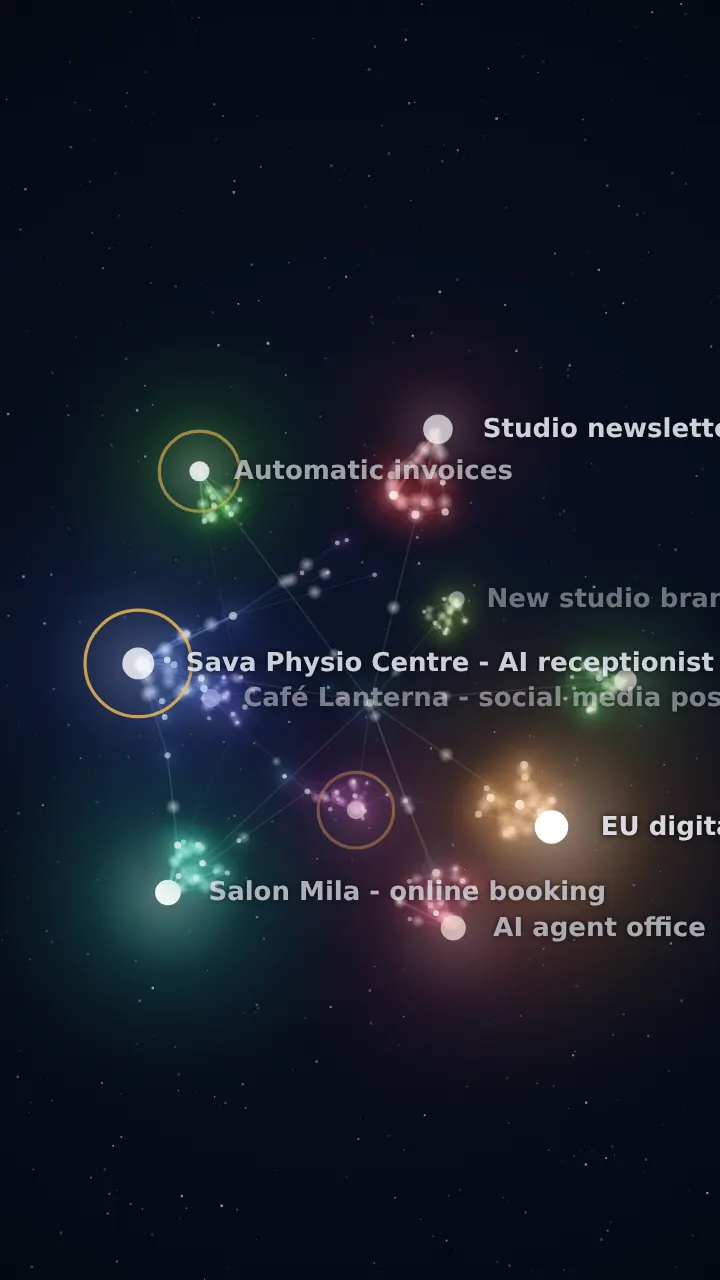
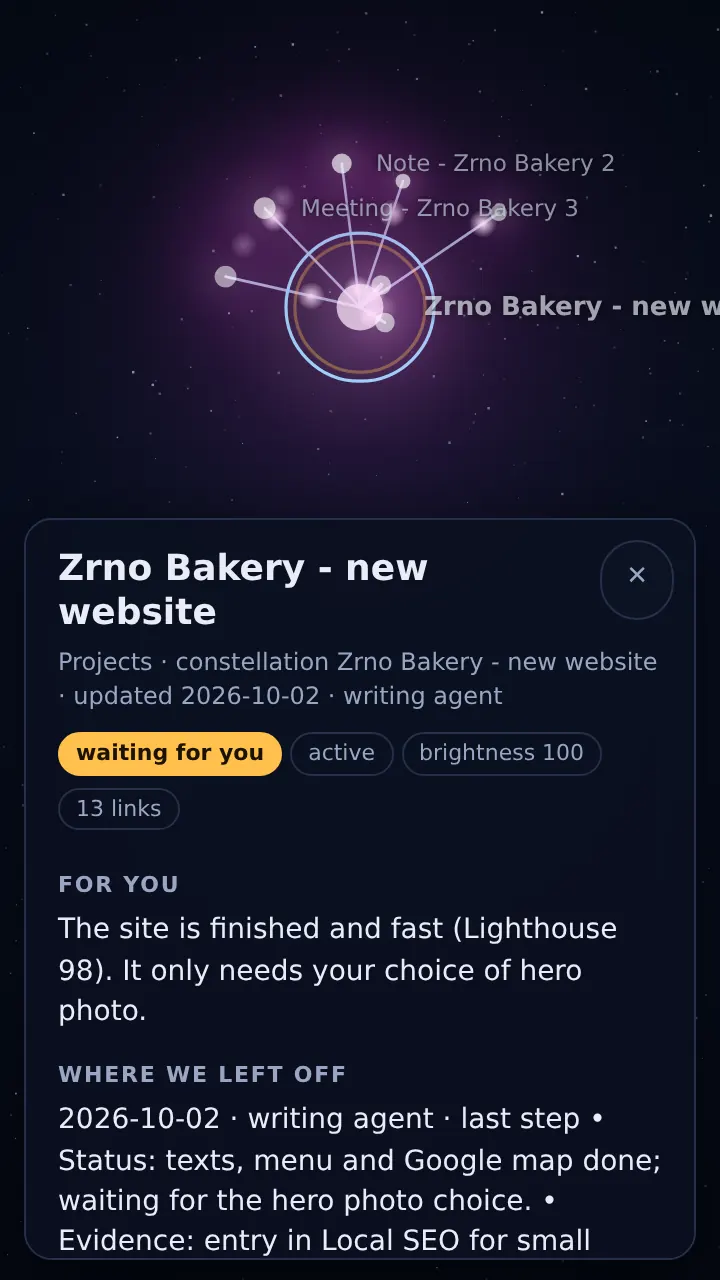
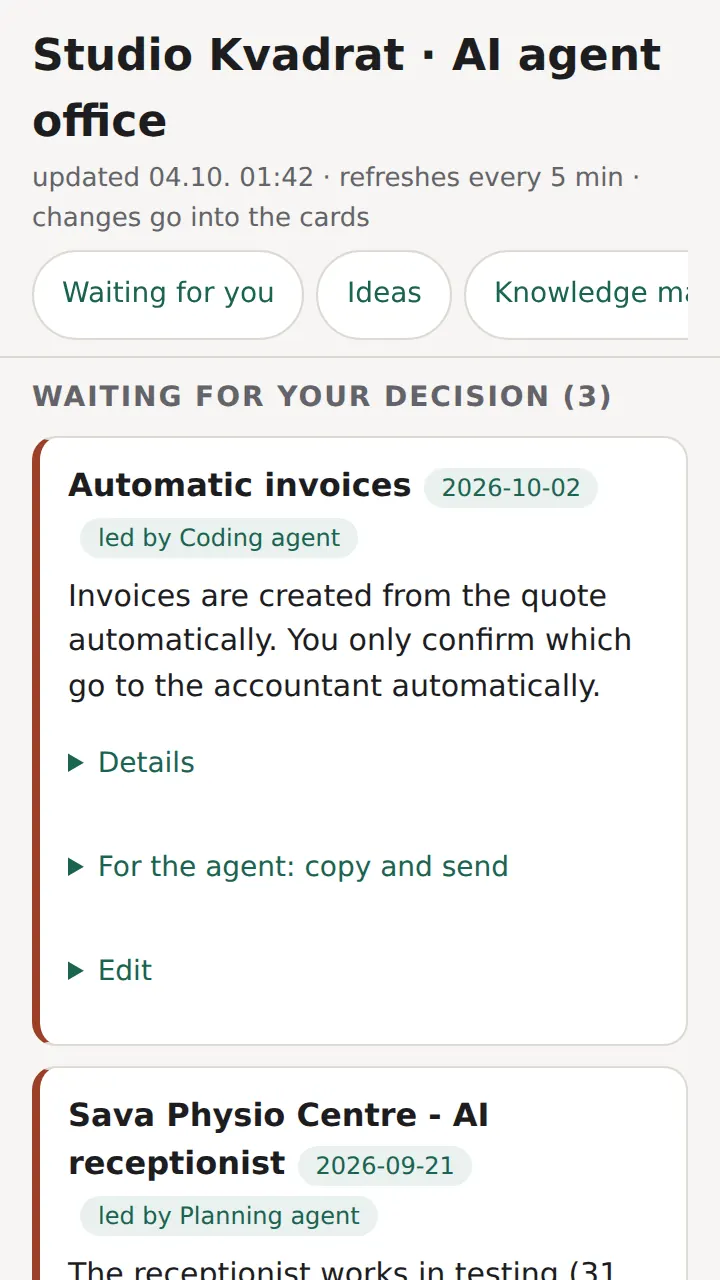
This is my own office for AI agents. The same system runs my projects every day. The video and screenshots show made-up data (demo “Studio Kvadrat”).
How it works
- Every project has a card: why we're doing it, when it's done, where we left off and the next step.
- The agents (Claude Code, Codex and Hermes) read the card before they start. After each meaningful step they record what they did, with evidence.
- The board on your phone collects every card. In the morning you see only what needs your decision.
- A nightly check flags stale cards and any agent that stops recording.
Why it works
- The memory lives in plain files on your computer or server, outside the AI chats. A new conversation or another agent picks up where the last one stopped.
- Every claim has evidence or the label NOT VERIFIED, so you see what has been checked.
- An agent publishes, sends messages, pays or deletes only after your yes. Everything else stays on the computer, and one command undoes it.
I set up the same system for you, shaped around your projects and tools. You get the scope and price after the assessment.
Ask for an assessmentSafe by design
The first version is local-first and approval-first. It does not auto-publish, send emails, use private credentials, control the browser or merge personal memory between agents.
- Wake: status briefing only.
- Show: read-only retrieval and visualization.
- Build: local draft artefacts.
- Act: approval draft before any external action.
Best first use case
Start with a Website + Visibility Check. It gives a concrete business entry point: what blocks trust, conversion, Google visibility or AI-search clarity, and what should be fixed first.
Get the 2-Point Expert ReadFAQ
What is an AI agent operating system?
It is a working setup rather than a product: idea intake, SEO and AISO workflows, agent tasks, review gates and stored artefacts, so the work an AI agent does is reviewable instead of disappearing into a chat window.
Is it safe to let an agent act on my business?
Nothing leaves the business without approval. External actions such as emails, bookings or payments pass a review gate first, and every step leaves an artefact you can check afterwards.
Where should I start?
With one repeatable process that already costs time every week. A single narrow use case is easier to verify and easier to stop than a broad rollout.
How is this different from just using ChatGPT?
A chat window has no memory of your rules, no approval step and no record. This setup adds the parts that make agent work reviewable: defined roles, stored context, gates before external actions and evidence of what was done.